
Increasing protection of people and property is the overall goal of 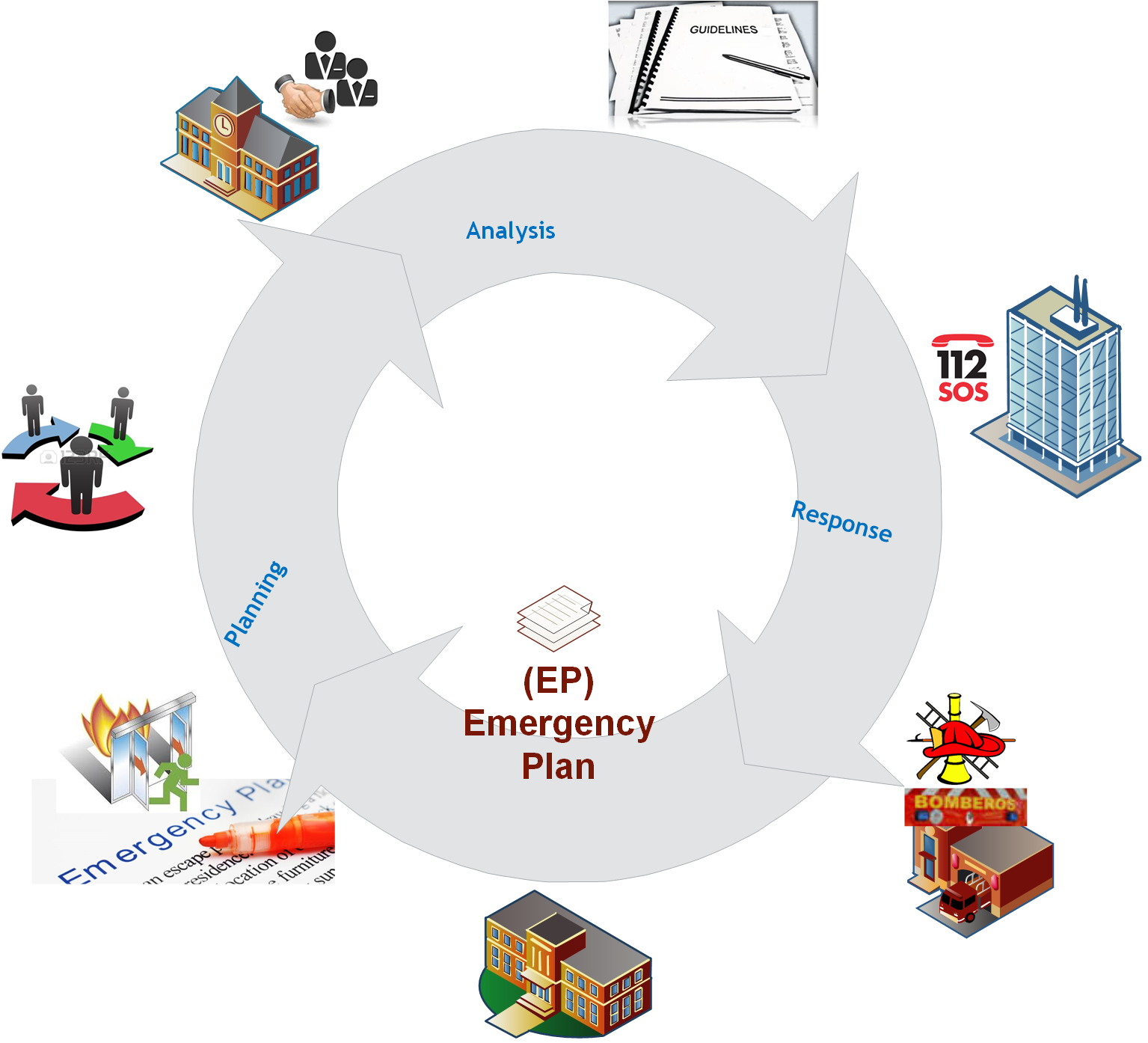 most of the emergency preparedness activities performed by organizations; among them, the elaboration of an emergency plan holding all the knowledge required to respond to the different hazards is of particular relevance. In fact, the need for such a plan has reached law-based mandatory status in many countries. In some of them, the content and management guidelines are stated in nation or state level laws, whereas in others they are just released as guidelines that organizations should follow. In both cases, the minimum content of plans is specified along with the procedures to register, maintain and use the plans. Examples of these sets of rules are the “Comprehensive Preparedness Guide” (CPG) 101, published by Federal Emergency Management Agency (FEMA) in the United States of America (USA)(CPG, 2010), the United Kingdom’s “Guidance-Emergency preparedness” (UK, 2014), and the “Self-protection Law” (NBA, 2007) in Spain.
Despite the relevance of the emergency plan in the overall emergency management lifecycle, little attention has been paid to aspects related to the assessment of the quality of current plans. As a consequence, planners develop their plans without a reference framework allowing the assessment of the artifacts developed and providing mechanisms for the improvement of plans. But defining quality of emergency plans is not easy: different communities have different views of quality, and a global quality model is still to come. In the meantime, however, we can look at the activities that the organizations perform to manage their plans to increase their preparedness. While in some cases an emergency plan is just printed and stored in a closet with the hope of not being used in the future-leaving the organization members to a clear under-preparedness state, in other cases some organizations show a proactive behavior that includes several activities aimed at keeping their members ready to respond to any type of adverse event.
QuEP (Quality of Emergency Plans Management) is a framework for the maturity-based assessment of emergency plans management. It can be used to evaluate the planning process, and analyze the capabilities and all activities involved before, during and after the process of implementing an emergency plan in an organization.The foundation of the framework is the Total Quality Management, or TQM for short. TQM is an integrated effort designed to improve quality performance at every level of the organization (Charantimath, 2011; Oakland, 2003). It is viewed as a continuous way of life and a philosophy of perpetual improvement in everything the organization does. The TQM strategy is defined in terms of sets of principles, practices, and techniques (Dean and Bowen, 1994; Mandal, 2009).

